Measuring dimensions of a pipe
I want to measure the dimensions of a pipe using the D435, but where to start?
Has there been any similiar (open-source) projects, or are there any code snippets that I can use as a starting point?
The end goal is to identify inner diameter and wall thickness, run several measurements all around the pipe, before returning min, max, and average values.
Illustration:
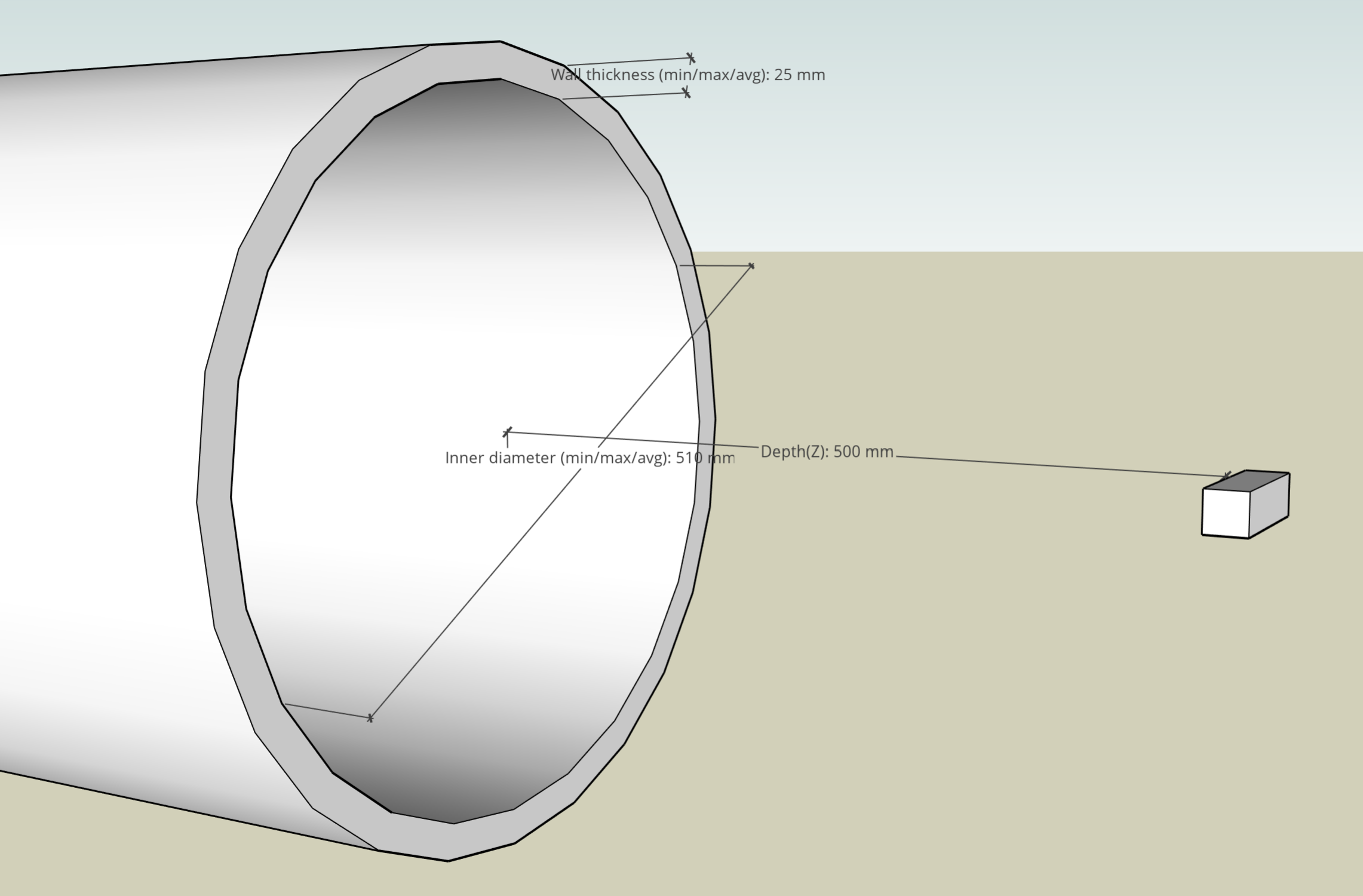
-
Hi @Tormod Slupphaug Due to the precision required in the measurements in your application, the link below to an official RealSense blog entry on the subject of using a depth camera for construction inspection may be a useful starting point.
https://www.intelrealsense.com/the-future-of-construction
It highlights a link to a research paper titled Using a 3D Computer Vision System for Inspection of Reinforced Concrete Structures
https://rd.springer.com/chapter/10.1007/978-3-030-17798-0_49
-
Thanks MartyX Grover for the quick reply, I'll have a look at the paper. 😊
The camera and pipe will be mounted in fixed positions, but the distance from camera to pipes can vary (Z ≈ 0,5 to 1,5 meters).
p.s. Please note that you tagged another user in your first post above.
-
Manufacturing facility with controlled lighting conditions. The lighting can be modified to achieve optimal results.
Regarding the system described in the paper: If I'm not mistaken, I think it's a bit different to what I'm trying to achieve. It looks to first and foremost gather depth data to look for imperfections and deterioration of an object's surface. Whereas I want to measure and compare a set of lengths (x to y).
I presume the real challenge here lies in actually being able to automatically identify which points to take measurements from.A few more illustrations, including center view:
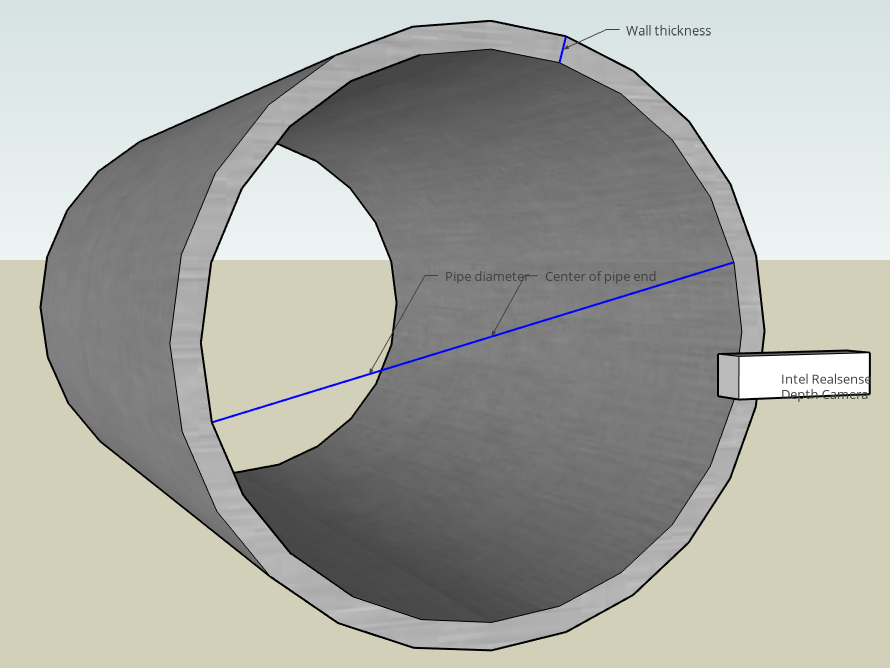
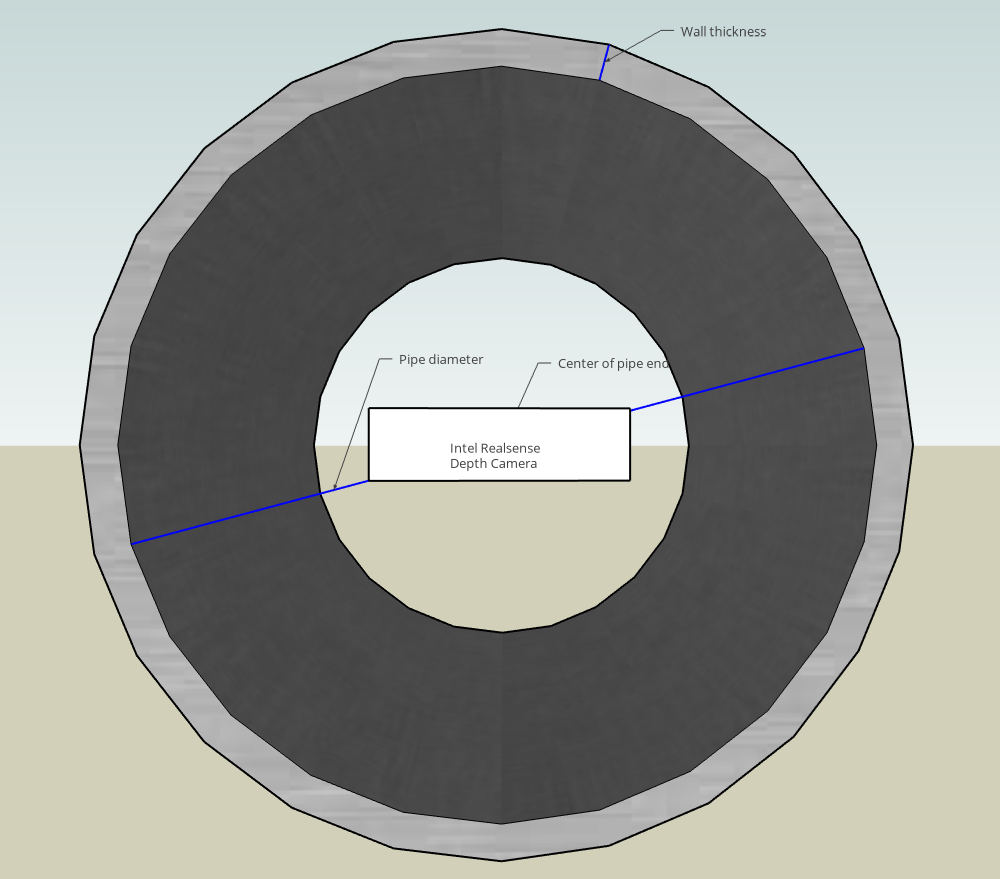
-
I am thinking that to ensure measurement precision, the new RealSense L515 lidar depth camera may be well suited. It works best in controlled indoor lighting conditions and can analyse 23 million accurate depth points per second. Precise volumetric measurement of objects is an application that it is especially aimed at.
https://www.intelrealsense.com/lidar-camera-l515/
-
I see. The D435 was chosen for its cheaper price and since it is also required to perform a reading of the pipe ID number (hard stamped on the pipe end). But the L515 also provides an RGB image?
What are the specific accuracy of L515 vs D435 (say e.g. +/- mm for a measurement of 10.00 mm)? -
The D435 can certainly perform volumetric measurements. If the pipe is not moving then you may be able to reduce cost further by using the D415, as it is especially suited to scanning static objects and has around 2x the image quality of D435. It is more vulnerable to image blur or motion artifacts than the D435 when capturing motion faster than human walking pace, but that should not be a problem in this case.
Furthermore, the D415 has a higher optimal depth sensing resolution than D435 (1280x720 on D415 compared to 848x480 on D435).
The 400 Series cameras can measure between two points on an object, such as an object's diameter, and there is a pre-made C++ example program called Measure in the RealSense SDK software for doing this.
https://github.com/IntelRealSense/librealsense/tree/master/examples/measure
In regard to your L515 RGB question: yes, it can provide RGB.
Please sign in to leave a comment.
Comments
8 comments